
Article: The Australian Fibre Gap - Something Doesn't Add Up!
This article was originally published via LinkedIn. Click here to view the article.
By Martin Kaderavek, Founder & CEO, Pectin 360
There's a traceability and provenance gap as much as a nutritional one emerging in the Australian food market — and it's exactly the opening for an Australian industry that can supply fibre grown and made locally.
Only 4.2% of Australian adults meet the recommended intake of fruit and vegetables - down from 5.4% just five years ago (ABS, National Health Survey). At the same time, Australia's dietary fibre ingredients market is forecast to grow from US$159m in 2025 to US$280m by 2033, a 7.4% compound annual growth rate (Grand View Research).
That's not a contradiction - it's a disconnect worth understanding. Most of that market value growth isn't coming from Australians eating more fresh fruit and vegetables. It's coming from the premium prices manufacturers pay for isolated, more processed fibres - ingredients like inulin and resistant starch - bought back into reformulated foods after industrial processing strips the natural fibre out in the first place. The market's dollar value climbs because these additives carry a steep price premium, not because the volume of fibre Australians consume is rising. A commercial patch, dressed up as a fresh number, for a whole-food / fibre problem that is actually getting worse.
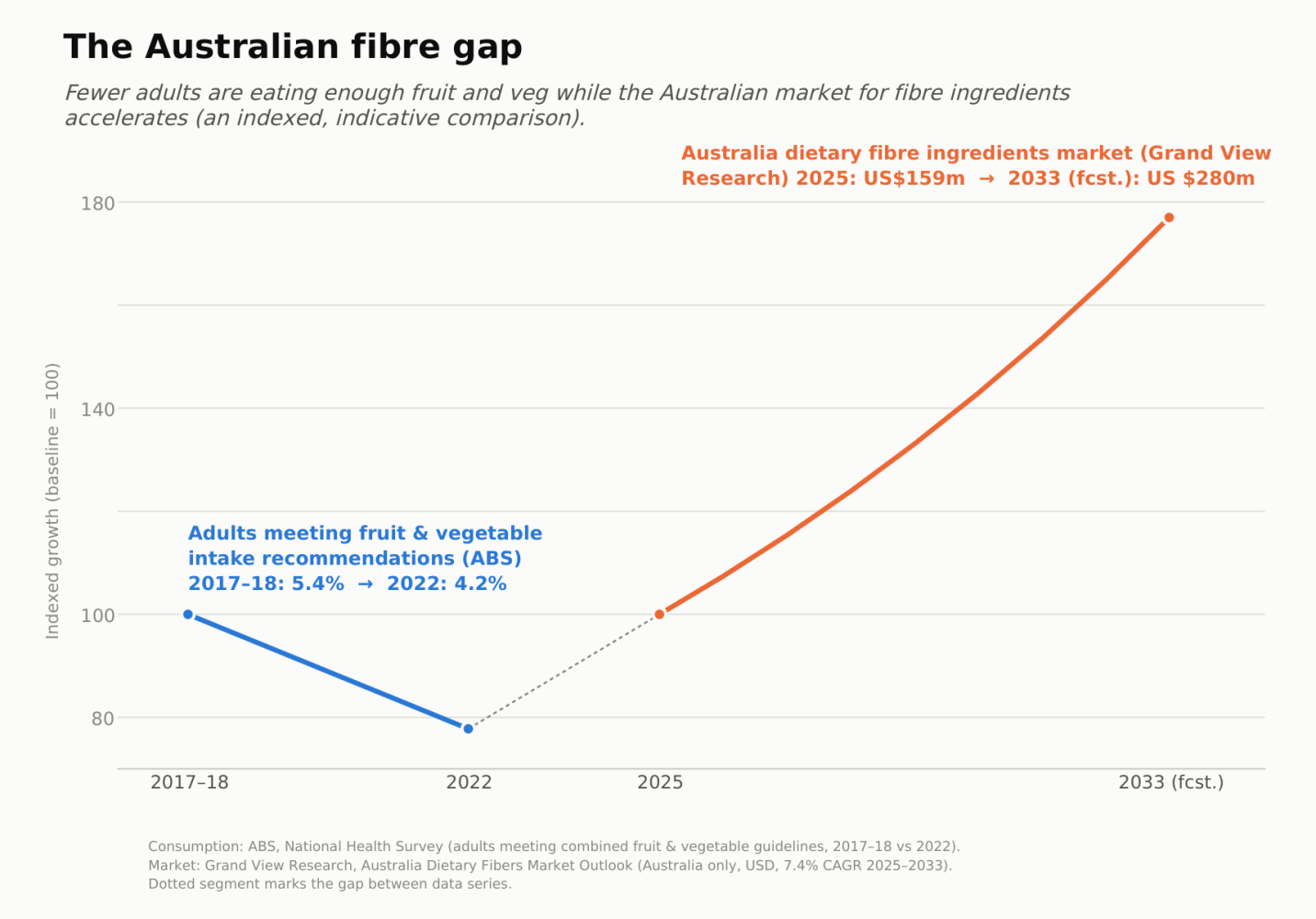
Chart 1 - The Australian Fibre Gap: fruit & vegetable recommendation vs. fibre ingredients market growth.
Put in real terms: the average Australian man eats 24.8g of fibre a day, against NHMRC's Suggested Dietary Target of 38g — the benchmark NHMRC associates with reducing the risk of diet-related diseases The average woman eats 21.1g, against a target of 28g. Scaled across the adult population, that shortfall adds up to an estimated 83,720 tonnes of fibre missing from the Australian diet every year against this benchmark.
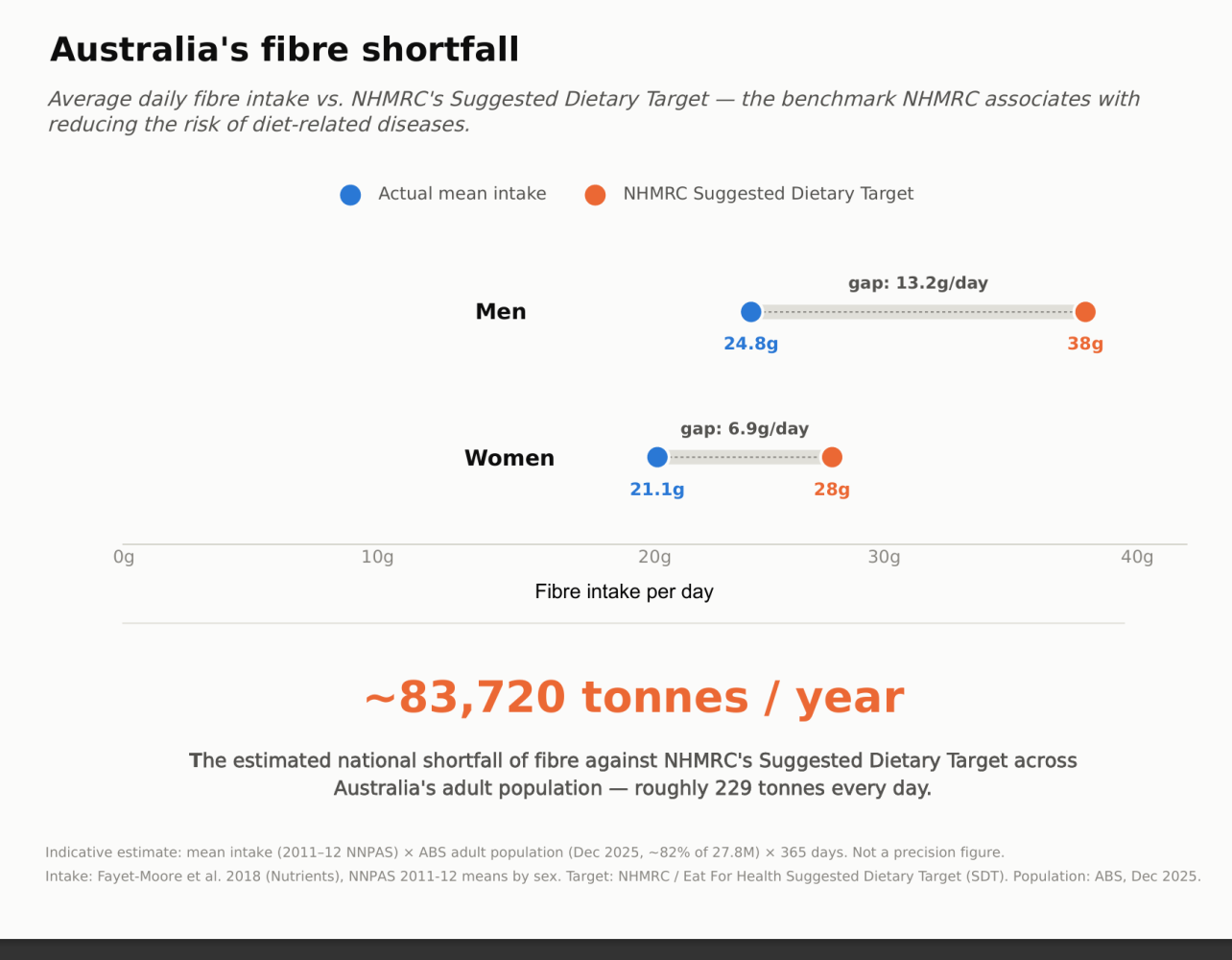
Chart 2 - Australia's Fibre Shortfall - actual mean intake vs. NHMRC's Suggested Dietary Target, and the estimated national annual volume gap (~83,720 tonnes).
That's not just a statistic - it's the size of the opportunity. Real demand for fibre solutions is growing, but it's not yet being met with less processed fibre that actually comes from real fruit & vegetables - the fibres filling that gap today are almost entirely imported, leaving Australian manufacturers & consumers with less visibility over where their fibre actually comes from and how it's made.